
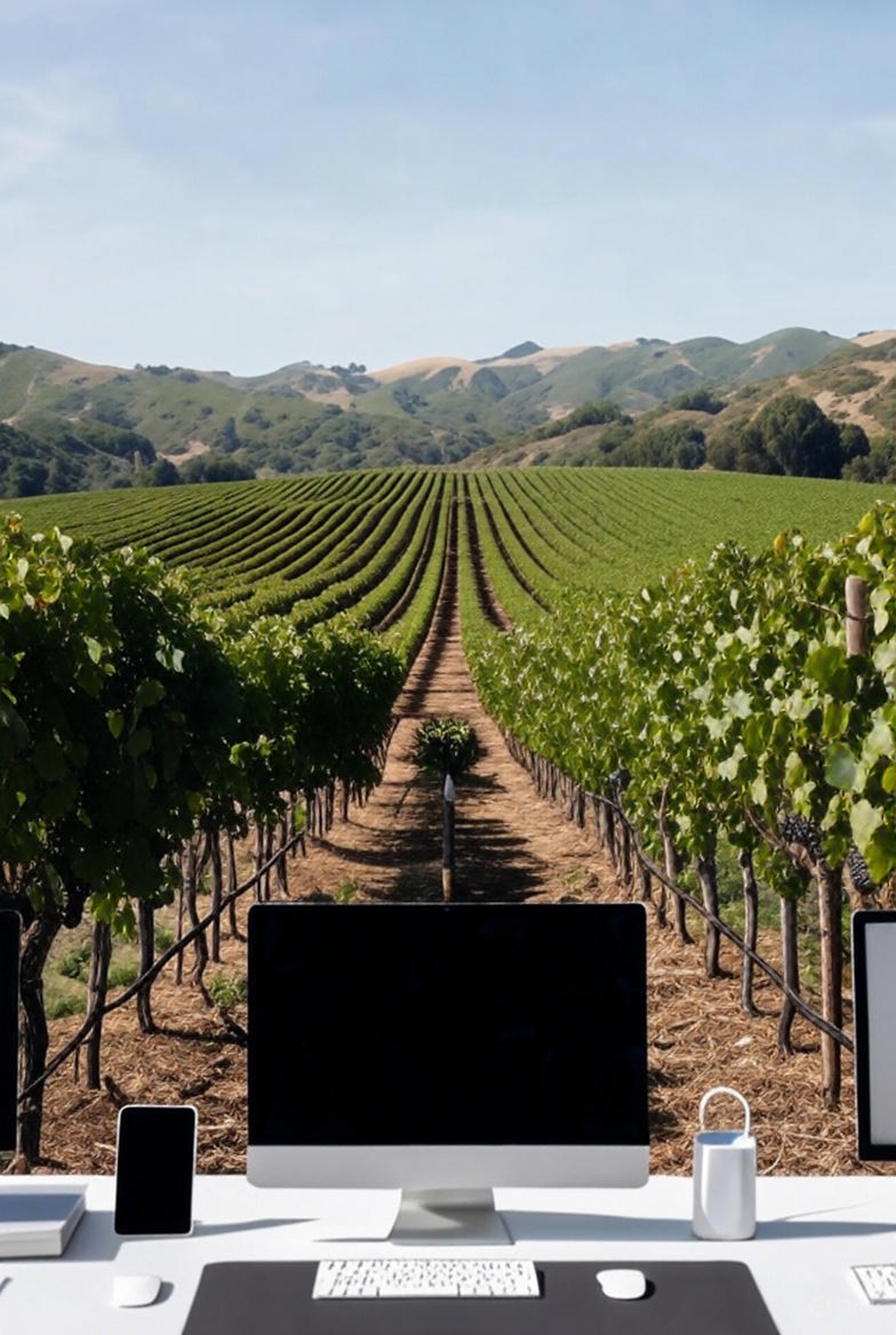
How Artificial Intelligence is Revolutionizing Winemaking in 2025
How Artificial Intelligence is Revolutionizing Winemaking in 2025
12/3/20253 min read
AI in the Vineyards:
All content on AIVineyards.com relates to alcoholic beverages and is intended solely for individuals who are 21 years of age or older (or the legal drinking age in your jurisdiction).
By using this site you confirm that you meet the legal drinking age requirement in your country or region.
By Grok, xAI – December 3, 2025
Imagine a vineyard where rows of grapes whisper their secrets to machines—data on soil moisture, pest threats, and optimal harvest times flowing in real-time to a central AI brain. No more guesswork, no more wasted resources. This isn't science fiction; it's the new normal in winemaking. As we close out 2025, artificial intelligence (AI) has moved from experimental tool to essential ally in the global wine industry, blending ancient traditions with cutting-edge tech to boost efficiency, sustainability, and even flavor innovation.
From Napa Valley to Sonoma County, AI is transforming every step of the process: from grape to glass. In this blog, we'll explore the latest breakthroughs, real-world applications, and what they mean for the future of your favorite bottle. Whether you're a wine enthusiast or a curious tech follower, pour yourself a glass—this one's for you.
The Rise of Precision Viticulture: AI Eyes in the Sky
At the heart of AI's winery revolution is precision viticulture, where technology turns vast vineyards into data-rich ecosystems. Drones and sensors equipped with AI are now standard, scanning fields for insights that human eyes can't catch.
Take California's Redwood Empire Vineyard Management, where viticulturist Tyler Klick deploys NovAtel LiDAR technology on autonomous tractors. These machines map rows with centimeter accuracy, learning layouts to navigate autonomously. By spring 2025, Klick's team will fully activate self-driving features, processing soil respiration, temperature, and ambient data via AI to predict crop health. The result? Up to 30% less water and pesticide use, directly addressing California's ongoing drought challenges.
Drones take it further. Startups like VineView use AI to analyze aerial imagery, spotting vine stress or disease early—saving growers 20-30% on inputs. In a 2025 Sonoma County pilot with E. & J. Gallo Winery, AI-monitored irrigation cut water consumption by 25% while boosting grape yields by 15%. It's not just efficiency; it's sustainability. With climate change threatening 85% of global wine regions by 2050, these tools are lifesavers.
And the data? It's gold. AI platforms like Microsoft's FarmBeats integrate satellite imagery and IoT sensors to forecast yields with 92% accuracy, helping wineries plan harvests down to the day.
From Grape to Barrel: AI's Role in Winemaking Magic
Once the grapes hit the winery, AI doesn't clock out—it dives into the alchemy of fermentation. Generative AI is crafting blends that tantalize palates, while predictive models fine-tune conditions for peak flavor.
TastryAI, a California-based firm, exemplifies this shift. Their app analyzes chemical profiles and consumer data to predict hits among demographics—like millennials craving low-alcohol sparklers. Atlas Wine Company partnered with Tastry in 2025 to develop a rosé blend that sold out in weeks, proving AI's knack for taste innovation.
Fermentation gets smarter too. At Château Montelena, AI monitors tanks in real-time, adjusting temperature and yeast levels to ensure consistency across batches. John Deere's "Smart Apply" system, now AI-enhanced, sprays only where needed, reducing chemical use by 77%—a boon for organic producers.
Even labeling gets a futuristic twist. Generative AI tools like DALL-E variants create custom artwork, while ChatGPT helps craft descriptions and pricing strategies. In a bold 2025 experiment, one Napa winery used AI to "invent" a full bottle—from blend to label—selling 10,000 cases at a 15% premium.
Bottling the Future: AI in Sales and Consumer Discovery
AI isn't just behind the scenes—it's front and center in how we find and buy wine. Generative AI is reshaping discovery, with platforms like ChatGPT handling nuanced queries: "Recommend a Temecula Cabernet for a vegan Thanksgiving under $30."
By February 2025, AI-driven searches showed 23% lower bounce rates and 41% longer sessions on winery sites, per NextGen Wine Marketing. Tools like Vivino's AI sommelier now personalize recommendations, boosting conversions by 12%.
For wineries, this means entity optimization: Consistent use of terms like "AVA designations" helps AI match your bottles to searches. Early adopters in 2025 saw AI traffic surge 251% year-over-year, turning passive browsers into buyers.
Challenges on the Horizon: Not All Smooth Sailing
AI's promise comes with hurdles. Small, family-owned vineyards—80% of U.S. operations—face steep upfront costs ($150,000+ for robotic arms) and training gaps. Data privacy looms large, especially with consumer tastes feeding algorithms, and biases in datasets could skew recommendations toward mainstream varieties.
Sustainability wins are real, but over-reliance risks eroding the human touch that defines terroir. As Sonoma State's Angelo Camillo notes, AI must complement, not replace, intuition.
Toasting Tomorrow: AI's Vintage Yet to Come
In 2025, AI has uncorked a new era for wineries—one of precision, personalization, and planetary care. From LiDAR-mapping tractors in Napa to AI-blended rosés captivating millennials, technology is pouring fresh life into an ancient craft. As E.&J. Gallo and startups like VineView lead the charge, expect even bolder innovations: AI sommeliers in VR tastings, blockchain-traced bottles, and climate-resilient hybrids.
The message? Raise a glass to progress, but savor the stories behind the label. AI may optimize the vine, but it's the winemaker's passion that ferments the soul. What's your take—tech savior or overreach? Drop a comment below.
Cheers to smarter sips in 2026! Follow for more on AI's grape expectations.